Reward the relationship, not just the card swipe
Most bank loyalty programmes reward card spend. Attribute-driven tiers and earn let banks reward the whole relationship: deposits, investments, tenure and digital engagement.
Most bank loyalty programmes were designed by card teams, so they reward card spend. That made sense when cards were the main digital touchpoint. Today it rewards the wrong things.
A customer who moves their salary to the bank, grows their investment balance and takes out a mortgage can earn fewer points than someone who swipes a card for groceries. The programme cannot see the relationship, so it cannot reward it.
YouReward is built to reward the whole relationship.
What is relationship-based loyalty?
Relationship-based loyalty rewards customers for the value of their total relationship with the bank: deposits, assets under management, products held, tenure and digital engagement, as well as spend. Tiers, earn and benefits are driven by what the bank actually values, not only by transaction volume.
How does YouReward know about the relationship?
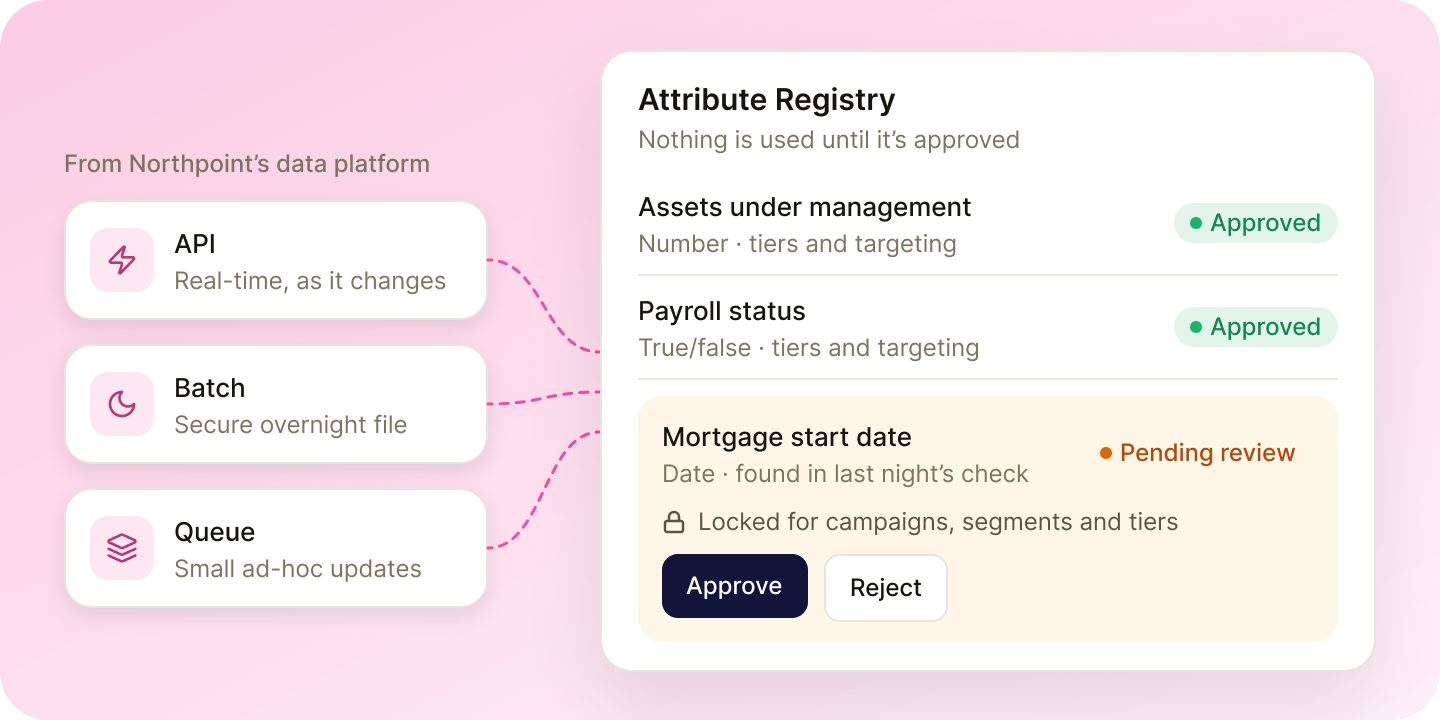
Through customer attributes. The bank sends YouReward the attributes it chooses from its data platform, such as assets under management, products held, payroll status, customer segment or premium banking status. Each attribute arrives in one of three ways, depending on how quickly a change needs to take effect:
API: real-time updates as an attribute changes.
Batch: secure overnight file transfer for bulk updates.
Queue: small, ad-hoc bulk updates as messages.
YouReward also derives its own attributes from loyalty activity from day one: current tier, points balance, lifetime earn and burn, tenure, days since last activity and recent spend.
The bank stays the source of truth. YouReward keeps a copy of only the attributes it needs and never edits the bank’s customer data, which makes privacy and data-protection reviews much simpler.
How are attributes governed?
Attributes are configured, not hard-coded. Bank administrators manage them in an Attribute Registry, deciding whether each one can be used for targeting, as a tier criterion, in analytics or in exports. Each attribute has a type (number, date, true or false, text or list), which decides the comparisons rules can make with it.
A nightly check spots new attributes in the bank’s feed and holds them as pending review. No new attribute can be used in a campaign, segment or tier until an administrator approves it. Banks get the flexibility to add data without the risk of it being used before anyone has looked at it.
What can a bank reward that it could not before?
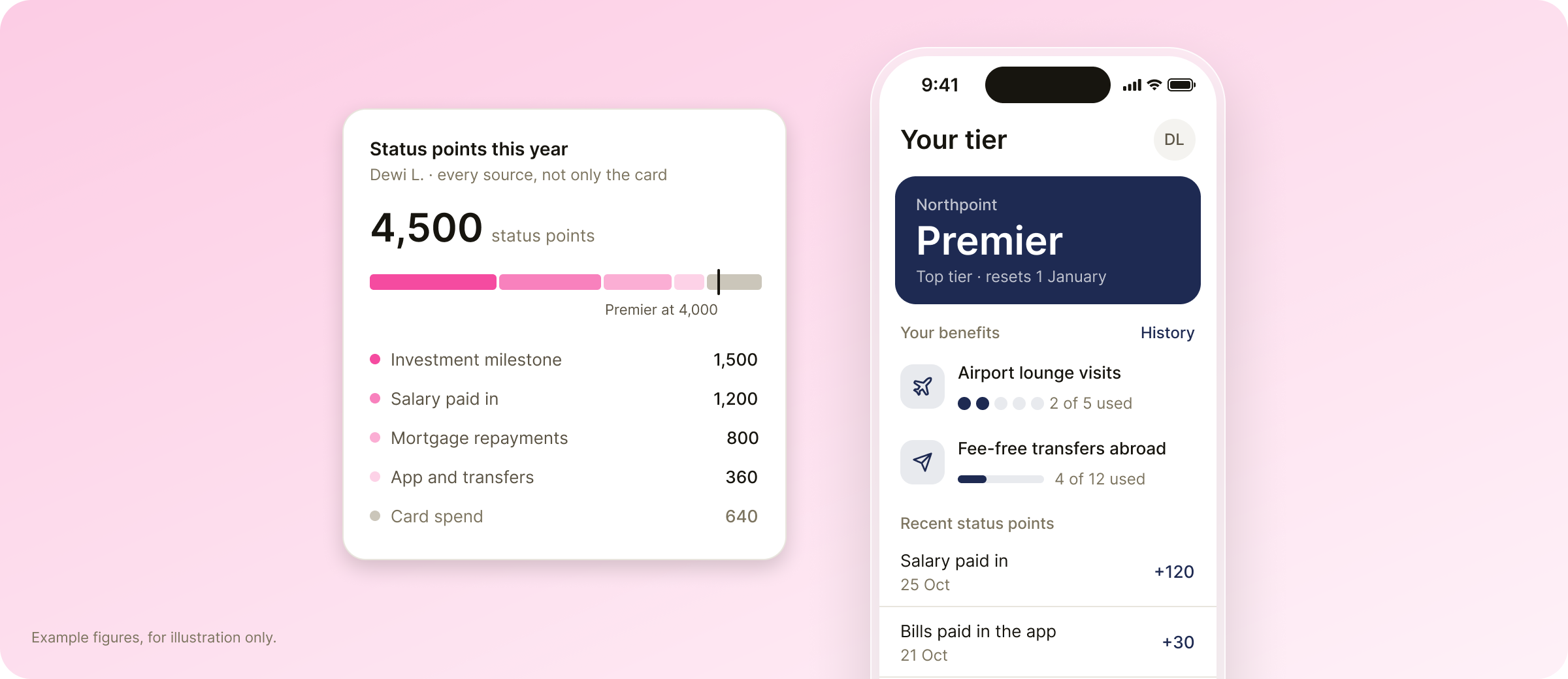
Tiers based on the relationship. Tiers can qualify on status points, on attributes such as premium banking status or assets under management, or on both. Status points can expire in different ways: never, by annual reset, over a rolling window or after inactivity. Relationship managers can still upload VIP members to override the automatic tier.
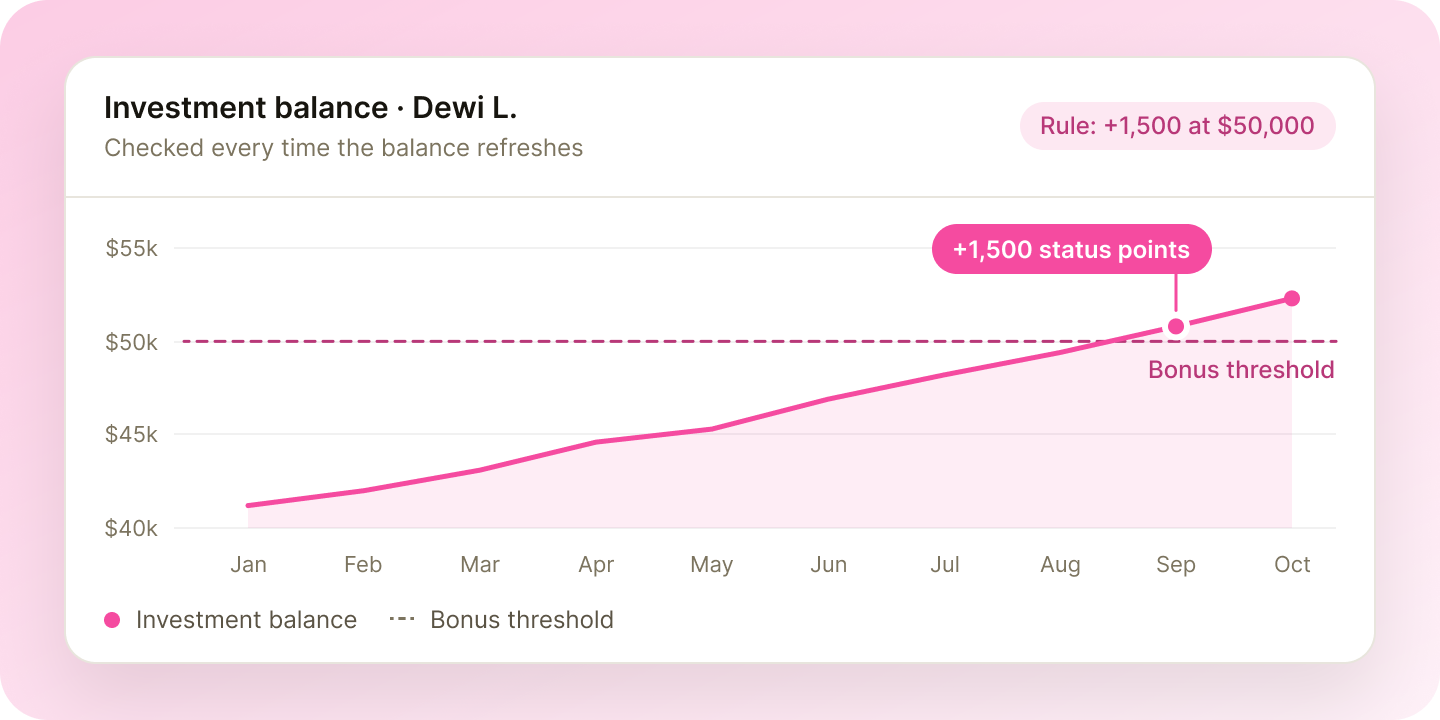
Earn when an attribute crosses a threshold. Award points when a customer’s investment balance grows past a set level, checked every time the attribute refreshes. Wealth growth becomes a rewardable behaviour.
Earn for digital engagement. Reward fund transfers, bill payments, product purchases or logins in the mobile app, with per-member limits by day, week, month or all time, and a campaign budget.
Earn mapped to core banking. A transaction type registry maps core banking transaction codes to earn and cashback rules, with suggested default rates and a queue for any codes not yet mapped.
Tier benefits that are not points. Premium customers care about privileges more than points. The tier benefit catalogue grants quota-based booking, discount and banking privileges by tier, such as five lounge visits a year. Members see what they have left (“used 2 of 5”) and their benefit history.
Warnings before a downgrade. Configurable downgrade warnings and benefit comparisons give customers a reason to stay, not just a notice that they have slipped.
How do marketers use this day to day?
Through named, reusable audience segments built from filters across every attribute, combined with past campaign participation and uploaded lists. Segments show live audience counts and which campaigns use them. Attributes are also sent for eligible customers who have not joined yet, so banks can aim join prompts and welcome offers at exactly the customers they most want to enrol.
Frequently asked questions
Do we have to send all our customer data?
No. You send only the attributes your campaigns and tiers need, and you can add more as campaigns require them.
Can tiers combine points and balances?
Yes. A tier can qualify on status points, on attributes such as assets under management, or on both.
Can we still reward card spend?
Yes. Transaction earn, multipliers and bonus events remain. Card spend becomes one input among many, rather than the only one.
Who controls which data is used?
The bank’s administrators, through the Attribute Registry. New attributes stay locked until they are approved.
See how loyalty programmes work in YouReward, how Youtap works for banks, or talk to our team.